Immigration in Mayotte: what are we really talking about? A perspective by Léonelle Redjekra
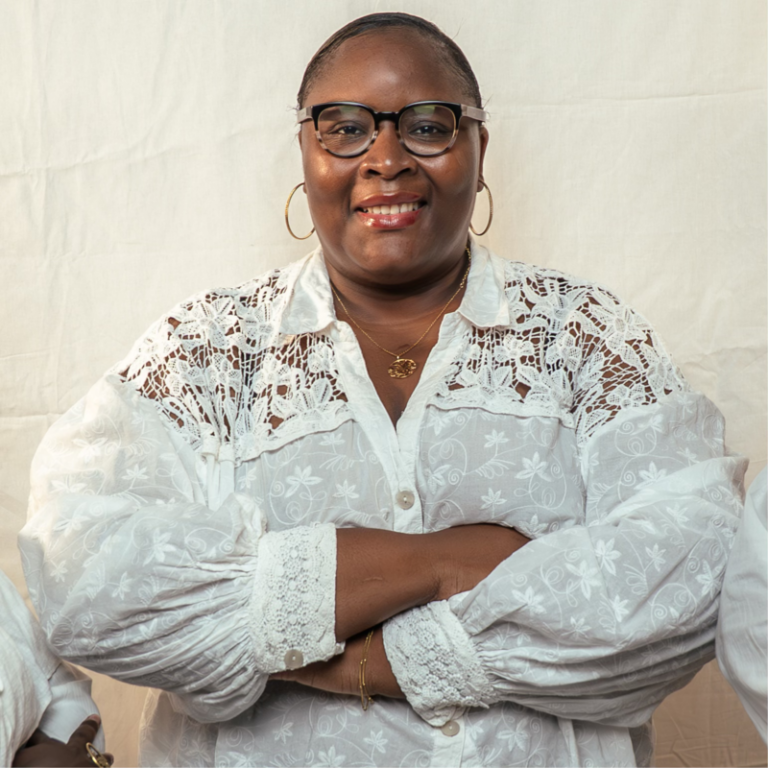
Mayotte is once again at the heart of the immigration debate. Deportations of undocumented migrants, increased border controls, proposals to limit the right to asylum or birthright citizenship: in recent weeks, political announcements have multiplied. But what do those who live in Mayotte have to say about migration? Of Central African, Mahoran, and Malagasy descent, Léonelle Redjekra has lived on the island since 2017. An entrepreneur, she shares a perspective shaped by her own life experiences on a territory molded for centuries by migrations, movements, and encounters. An invitation to look beyond the statistics and political rhetoric.
” On August 21, Édouard Philippe chose the Mayotte archipelago to launch his campaign for 2027: the Horizons candidate announced there his intention to “close the floodgates of immigration”, with the suspension for a whole five-year term of the right of asylum, birthright citizenship and family reunification, as well as the creation of a “return center” in East Africa.
Five days later, on August 26, it was Sébastien Lecornu’s turn to visit Mayotte, a year after the launch of the five-year plan for the island’s recovery. Accompanied by six ministers, the Prime Minister chaired a meeting of the staff responsible for combating illegal immigration at the Dzaoudzi naval base and announced a “militarization” of the operation: drones, tethered balloons, and interceptor ships (their number is to increase from nine to thirteen by 2028), with the stated objective of “eliminating blind spots around the island.” On the civilian front, he also set a goal: to surpass the 16,500 deportations already carried out since the beginning of the year.
Two trips, just days apart, with immigration serving as the almost sole lens through which to view Mayotte in the national debate.
But what does this tell us about Mayotte?
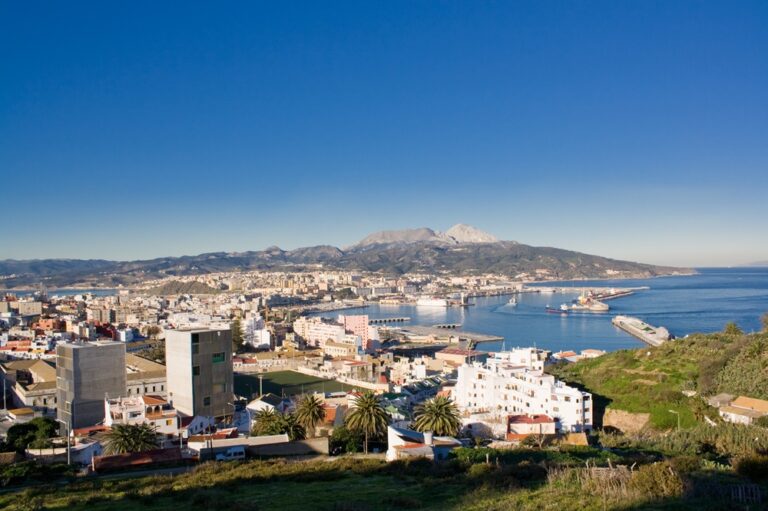
From mainland France, Mayotte is often portrayed as a French department grappling with poverty and major structural challenges. It’s described as an island with exceptional landscapes, often reduced to its lagoon and turquoise waters. But above all, it’s discussed as a territory where immigration has become the primary topic of conversation.
Between these three images, however, lies a far more complex reality.
It’s the reality of the women and men who, every day, cope with a sometimes difficult situation: access to water, housing, infrastructure, traffic congestion, unsanitary conditions, precarious living conditions, mental strain, access to rights, and access to essential services. And within this daily reality, one thing seems essential: the territory’s difficulties don’t stop at the border between “those who are from here” and “those who come from elsewhere.”
They affect, to varying degrees, all the people who live in Mayotte.


A story of migration
To speak of migration in Mayotte is also to speak of the very history of the territory. The Mahoran population is the product of centuries of movement, encounters, and cultural exchange. People from Africa, Madagascar, the Arab world, and the Swahili-speaking region have contributed to shaping the island’s identity.
This history can still be read today in the languages heard in the streets, in first names, in cultural practices, in beliefs, and also around a table. Mayotte’s multilingualism tells a story. So does the cuisine. Local products, spices, culinary techniques, and traditions bear witness to these long-standing exchanges between Mayotte, the Comoros, Madagascar, mainland Africa, and the Arab-Muslim world.
Migration is therefore not a recent phenomenon in Mayotte. It is part of the territory’s history. Today, this story continues: new people arrive—Eritreans, Somalis, Afghans, Ethiopians, Burundians, Congolese, Tanzanians… They arrive with their own histories, languages, skills, hopes, and sometimes particularly difficult journeys into exile.
Today, the political debate boils down to answering two questions: how to deport them? How to prevent them from entering the territory?
The question is rarely: how to welcome these people? How to enable them to find their place and contribute their best to lift Mayotte up? How to make their experiences and skills an asset for Mayotte? And above all, how to prevent a society from collapsing by devoting all its resources to exclusion rather than inclusion?
It’s about creating enough spaces so that people can meet, learn from each other, and build together.
A cultural activity.
A shared meal.
An entrepreneurial project.
A sporting event.
A workshop.
A conversation about a language.
A community initiative.
Sometimes it’s small encounters that can change perspectives. And when these encounters multiply, they can produce something greater: a collective movement. “


About Léonelle Redjekra
Léonelle Redjekra is a committed entrepreneur and project leader who has been living in Mayotte since 2017. Born in the Central African Republic and raised between mainland France and French Guiana, her background is enriched by diverse regions and cultures. After experience in real estate, construction, and project management, she turned to entrepreneurship and the social and solidarity economy.
As the founder of Léo Events and Léo Mode, she develops projects around photography, audiovisual production, communication, and the promotion of African fabrics, artisanal skills, and local initiatives (involving both public and private stakeholders). She is also a founding member of Makazi Yangou, an association dedicated to providing decent housing and support for vulnerable people.
With Léo Digit, she continues her commitment to increasing the visibility of women entrepreneurs and promoting their expertise in the Indian Ocean region. Her career has been recognized with the title of Mayotte BGE Talent 2025, as well as the Innov’Ultramarin Challenge, the first edition of which was held in 2026 at the initiative of France Travail and its partners. This challenge rewards entrepreneurs from France’s overseas territories who, through innovation and artificial intelligence (AI), develop solutions addressing the challenges of their region and contributing to job creation and entrepreneurship.
Through her various initiatives, Léonelle builds bridges between entrepreneurship, creation, digital technology, inclusion, and territorial development.