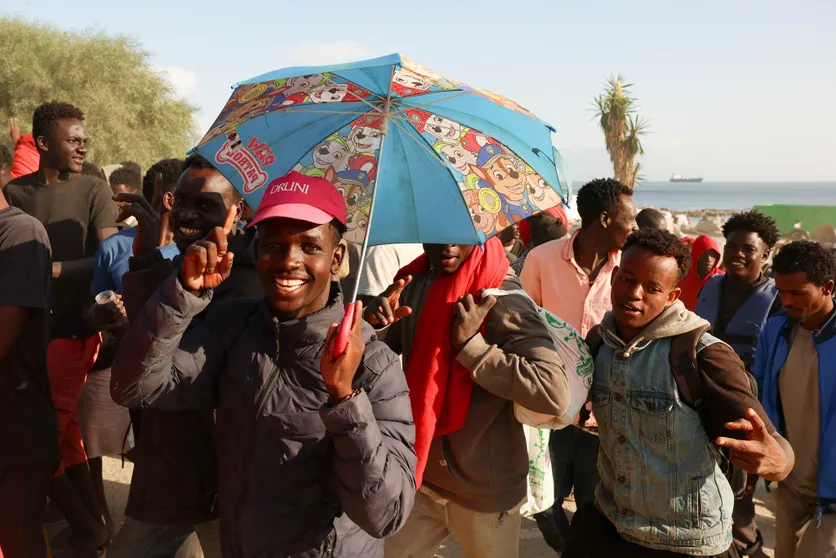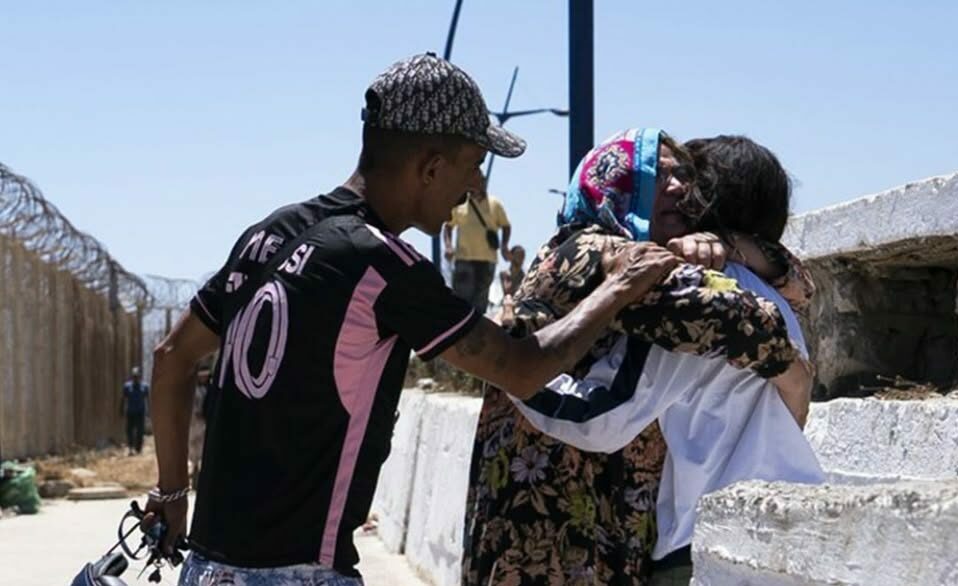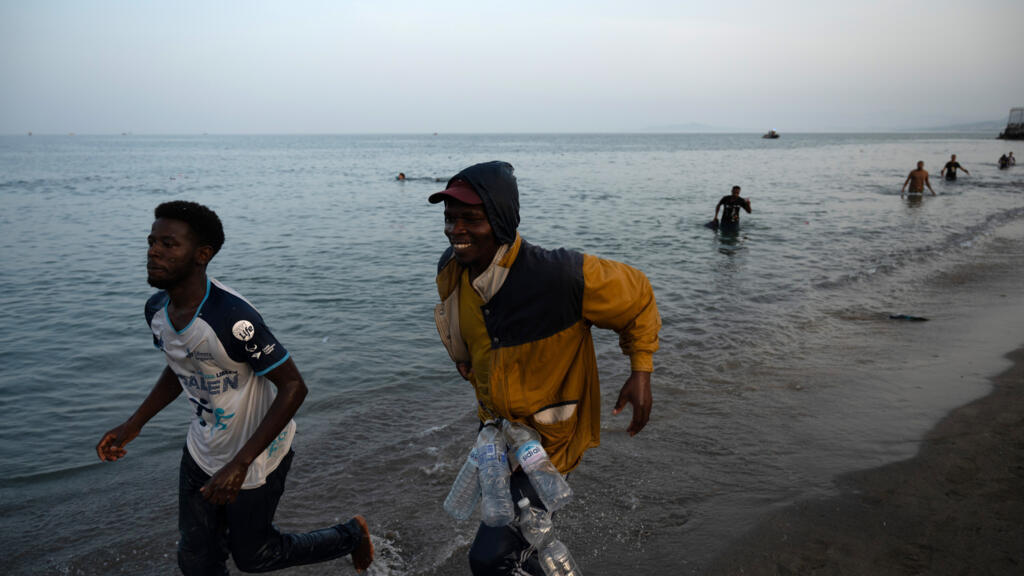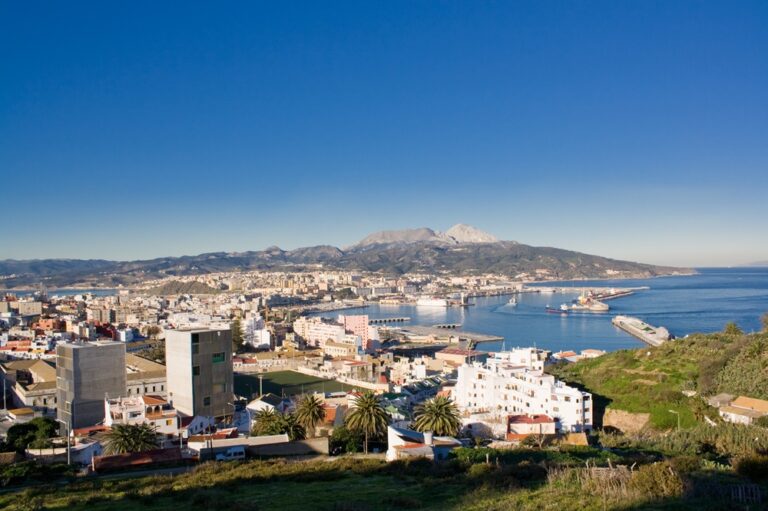
In recent weeks, Ceuta has once again made headlines. Tens of thousands of people have tried to enter the Spanish enclave from Morocco, in a sudden movement that has caused dozens of deaths, an overload of reception facilities and strong political tensions.
Very quickly, the public debate closed around a familiar question: can Europe control its borders?
But this perspective is politically biased. Ceuta tells a story of migration, power struggles between states, including European states, of youth without prospects, and of European dependence on its neighbors.
Above all, it reminds us of an obvious truth: migration has always existed. The real question is not how to make it disappear, but under what conditions we want it to take place.
1. What happened?
At the end of July 2026, tens of thousands of people attempted to reach Ceuta from Morocco, primarily by sea and around the El Tarajal border crossing.
Calls to reach the border and rumors claiming it would be easier to cross circulated on social media. Within hours, thousands of people had moved.
The consequences were devastating: dozens of deaths were officially recorded, and many people were reported missing.
Ceuta, a Spanish city of approximately 85,000 inhabitants located on the North African coast, found itself facing a humanitarian emergency. In the following days, Spain and Morocco tightened border controls.
2. Why did so many people leave at the same time?
In reality, several phenomena appear to have overlapped.
- In Morocco, young people, increasingly educated and connected, are facing precarious employment, low wages, and a cost of living that prevents them from becoming self-sufficient.
- Social media played an accelerating role by rapidly disseminating information, true or false, about the border opening.
- Finally, the border itself raises questions: when a system that is usually highly controlled suddenly becomes more permeable, even briefly, it is essential to understand why.
One thing is certain: the desire to leave was stronger than the administrative, police, and technological barriers.
3. Is this simply another “migration crisis”?
Presenting Ceuta solely as a migration crisis means focusing on the people crossing the border without considering the border itself.
Yet this border is also a diplomatic tool.
Spain relies heavily on Morocco’s cooperation to control departures to Ceuta, Melilla, and the Spanish coast. Part of the control of the European border therefore rests on decisions made in Rabat.
This gives Morocco political leverage and reveals a weakness in the European model: the more Europe outsources border control, the more it depends on third-party states to implement its own migration policy.
4. Why do we talk about the instrumentalization of migration?
In May 2021, nearly 10,000 people entered Ceuta following a relaxation of Moroccan border controls, amid heightened tensions between Madrid and Rabat over Western Sahara.
The European Parliament condemned the use of migration control as a means of political pressure on Spain.
Five years later, the question arises again: did something similar happen in July 2026?
5. So Morocco “sent” Moroccans?
Even in a scenario where a state voluntarily relaxes its controls, people crossing the border have their own reasons for leaving: to work, study, join their families, seek protection, or simply find opportunities elsewhere.
A state can potentially exploit a pre-existing desire for mobility. It doesn’t create it out of thin air.
This is crucial, because talking about “instrumentalization” should never lead to treating people themselves as mere instruments.
6. And the “pull factor” theory?
Another explanation quickly circulated: the recent regularization of Spanish status had supposedly encouraged arrivals.
However, this measure only applied to people already present in Spain before a specific date. Those who arrived in Ceuta at the end of July were not eligible.
This does not mean that migration policies never influence decisions to leave. But this explanation is insufficient to understand Ceuta.
Above all, it often rests on a questionable idea: the more difficult a border is to cross, the fewer people will leave.
In reality, closing a legal migration route primarily shifts the routes, reinforces clandestine migration, and increases the risks.
7. What does Ceuta reveal above all?
Three things:
- Migration is also geopolitical.
Mobility can become a factor in the balance of power between states. - Closing borders does not eliminate mobility.
It simply displaces it and makes it more dangerous and deadly. - Behind the “flows,” there are people.
Talking about “waves,” “pressure,” or “hybrid warfare” deliberately erases individual journeys and the fundamental human rights associated with each migrant, rights that Europe has a duty to uphold.
8. What we at SINGA think about it
At SINGA, we start from a simple conviction: human mobility is a reality that must be organized, and urgently so, to prevent these human tragedies.
People have always moved and will continue to do so (especially in the current political and climate context): to protect themselves, to work, to study, to start businesses, to join their families, or to build a life elsewhere.
Rather than escalating xenophobia and the dehumanization of migrants, the response from the European Union and its member states must focus on access to rights, reception, and inclusion.
Every additional tightening Europeans impose to close their borders fails to stop migration but succeeds in killing more and more migrants. This is a shameful record for a continent that claims to be the land of human rights.