From Marseille to Barcelona: How SINGA Chapters Share Ideas for Building More Inclusive Societies
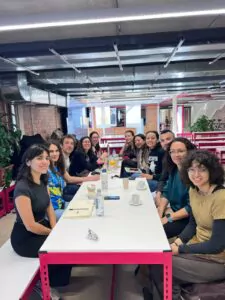
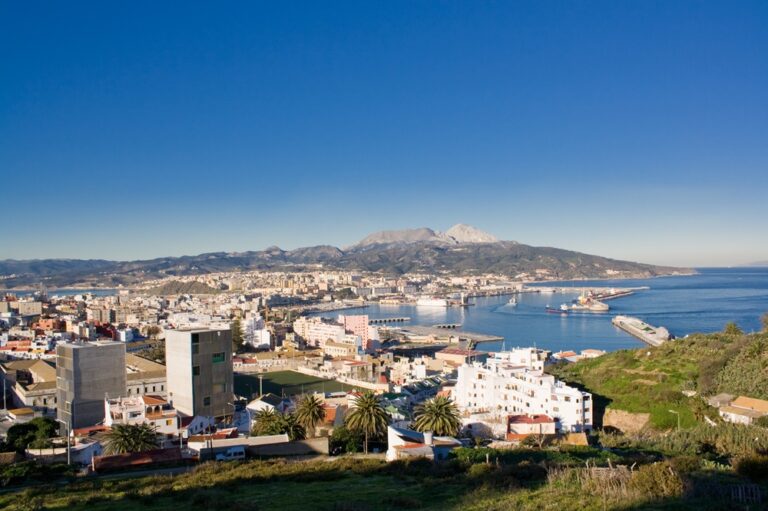
From March 30 to April 2, 2026, the SINGA Marseille team traveled to Barcelona as part of an Erasmus+ program. Over four days, the teams from SINGA Marseille and SINGA Barcelona discussed a common question: how can we create spaces where newcomers can truly participate in the social, cultural, and economic life of cities ?
In late March, the SINGA Marseille team joined SINGA Barcelona for a study trip organized with Erasmus+ funding.
Over four days, the teams met with local associations, cooperatives, and initiatives working with newcomers. The goal: to observe different ways of working, share concrete experiences, and better understand how two Mediterranean cities (Marseille and Barcelona) address similar challenges within political contexts that are sometimes very different.
For while debates on migration are taking place across Europe, local responses vary greatly from one country to another.
Two Countries, Two Political Contexts, Shared Challenges
As the meetings progressed, the discussions quickly went beyond simply learning about community projects. The teams also compared the realities faced in France and Spain : access to rights, regularization, the place of undocumented people in public spaces, municipal policies, and relations with local institutions.
One observation particularly struck the Marseille team: in many of the initiatives they encountered, newcomers are not merely supported. They lead the projects, make decisions, and participate fully in creating solutions.
Top Manta: When Former Street Vendors Create Their Own Cooperative
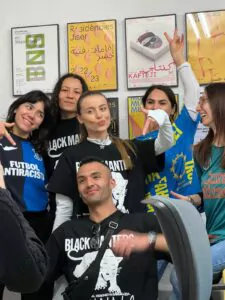
Among the most memorable encounters of the trip, the one with Top Manta left a strong impression. This cooperative was founded by former street vendors of Senegalese origin living in Barcelona. Today, it produces eco-friendly clothing through a short supply chain and carries a powerful message about dignity, work, and self-organization. The name “Top Manta” itself is a play on a Spanish expression used to describe street vendors who display their goods on blankets in the street.
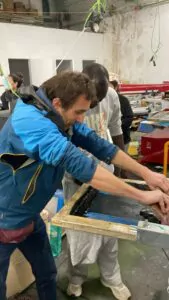
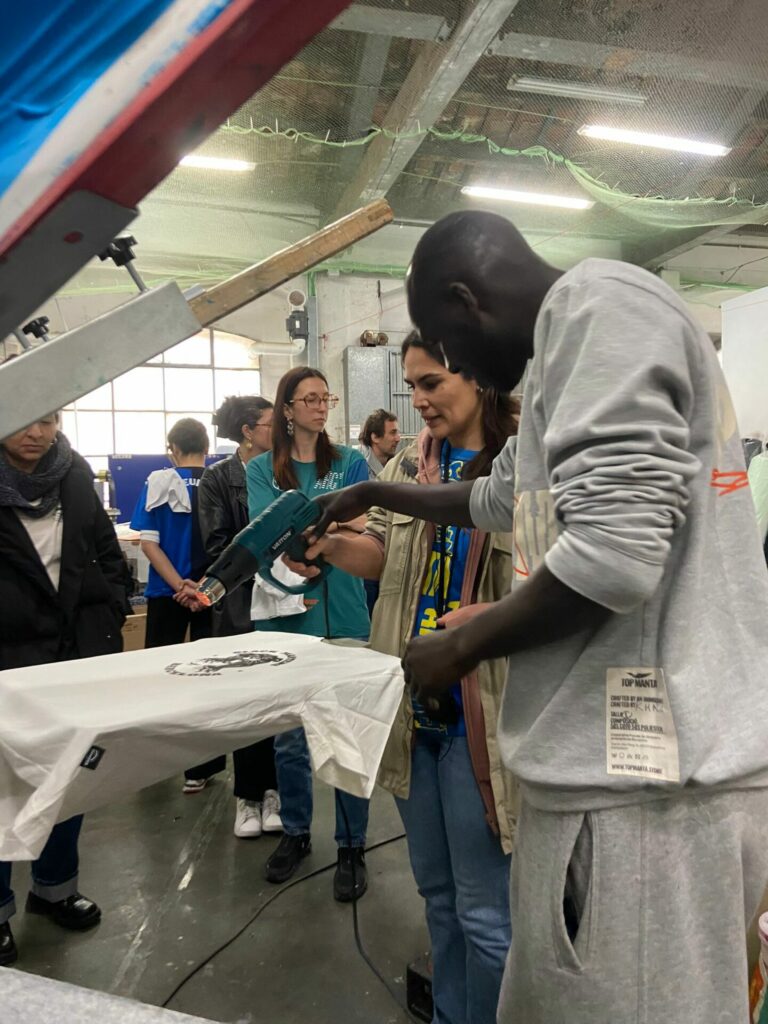
The SINGA Marseille team participated in a screen-printing workshop at their offices, discovering a model in which people who have experienced precarious circumstances have built their own businesses, their own jobs, and their own stories.
Restaurants, Art Projects, and Hybrid Spaces
Another important discovery : Espai Mescladis, a social integration restaurant that trains and employs new arrivals before integrating them directly into its establishments.
The venue functions as a training space, restaurant, community café, and meeting place all in one. A hybrid approach that combines economic activity, professional integration, and the creation of social bonds.
The team also met with several organizations supporting artistic projects led by exiled people, an area still relatively underdeveloped in France, but particularly inspiring for the discussions taking place in Marseille.
These initiatives use art not only as a tool for expression, but also as a means of visibility, empowerment, and participation in local cultural life.
Discovering Barcelona Through the Eyes of a Migrant
One of the highlights of the trip was a “migrant tour”, a tour of Barcelona told through the eyes of someone who had experienced exile and arrival in the city.
Far from the usual tourist routes, this tour revealed a different urban landscape : one of administrative procedures, first homes, places of mutual aid, the difficulties encountered, but also the bonds of solidarity built over time.
It was a way of telling the city’s story through the lived experiences of those who are discovering it while rebuilding their lives. This initiative particularly inspired the SINGA Marseille team, which is now considering developing a similar project in Marseille.
Building Bridges Between European Cities
This visit helped strengthen the ties between the SINGA Marseille and SINGA Barcelona teams.
These collaborations between cities are becoming essential for sharing best practices, learning from one another, and developing more human responses at the local level. For even though political contexts differ, the challenges often remain the same : how can we help newcomers find their place ? How can we build connections between people who might never have met otherwise ? And how can we ensure that inclusion is not just a principle, but a concrete experience lived out every day ?
Over four days, Marseille and Barcelona worked together to find answers to these questions.